What a corset back can actually do
Four sizes, sometimes five, and the two cases where the answer is none.
July 2026 · Photograph by Sarah Brookes
A corset back is the most misunderstood thing on a wedding dress. Brides are told it means the gown will fit whatever happens, and shops are content to leave it there, because it closes the sale.
What it actually gives you is a range, and the range has edges.
HOW MUCH IT GIVES
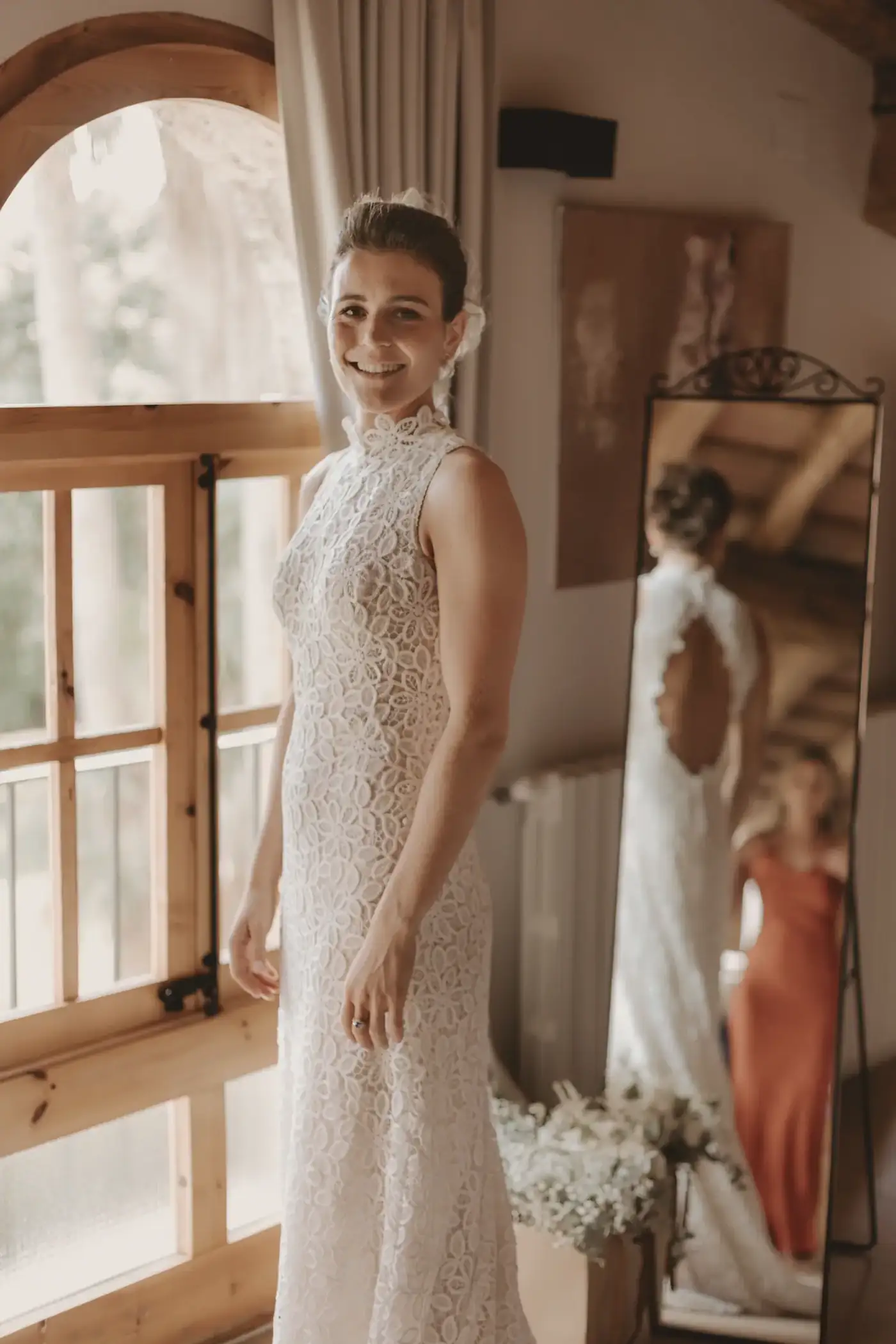
A laced back replaces a fixed closure with an adjustable gap. On most gowns that is four sizes of movement, occasionally five, and it works in both directions: a modesty panel behind the lacing lets the gap open, and pulling the lacing in closes it down.
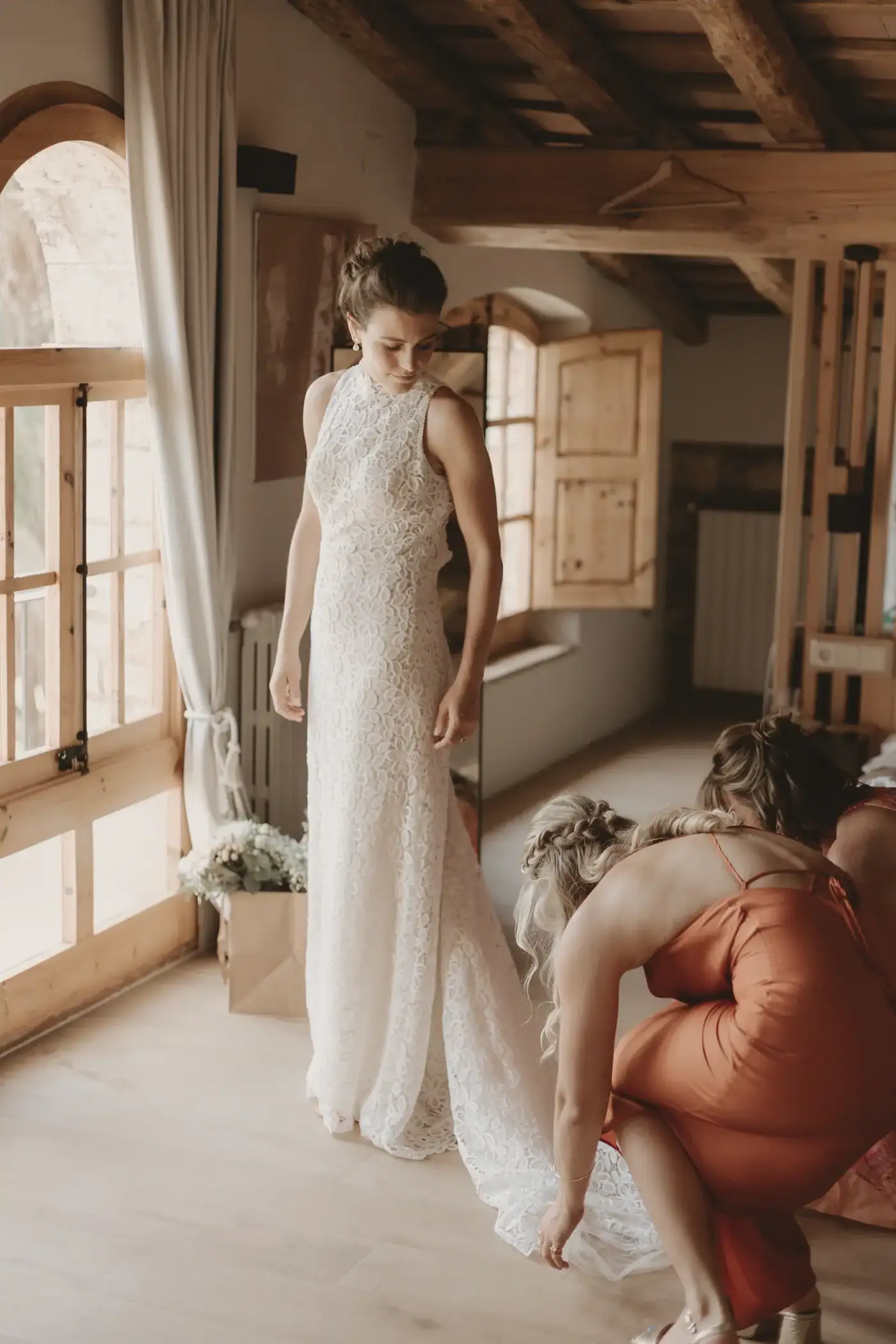
The number brides are rarely given is where that range sits. A corset back does not give you four sizes in either direction from wherever you are now. It gives four sizes in total, and where those four sit depends entirely on how the foundation underneath was cut.
WHERE IT DOES NOT HELP
Two cases, and in both the lacing is beside the point.
The first is the neckline and the shoulder. A bateau neck, an off-shoulder sleeve or a high illusion panel is cut to one specific frame. Lacing the back tighter pulls the front out of position rather than making it fit. If the neckline does not sit correctly at the first fitting, it is not a size problem and no amount of lacing will make it one.
The second is length. The hem is the one alteration that cannot always be undone, because it depends on how much fabric was left in there when it was first taken up. Four centimetres of allowance is four centimetres. A corset back does nothing for it.
WHAT TO ASK
Two questions, and they are the ones we publish on every gown rather than making you ask.
What does it fit after alteration, not what does the label say. And how much hem allowance is left, along with the previous bride’s height and heel.
That is why every listing here carries a range rather than a number.